Gorgias Alternatives for Ecommerce AI Support (2026)
An honest look at six Gorgias alternatives for ecommerce support, with verified 2026 pricing. Why teams switch — per-ticket plans stacked with per-resolution AI — and which tool fits which kind of store.
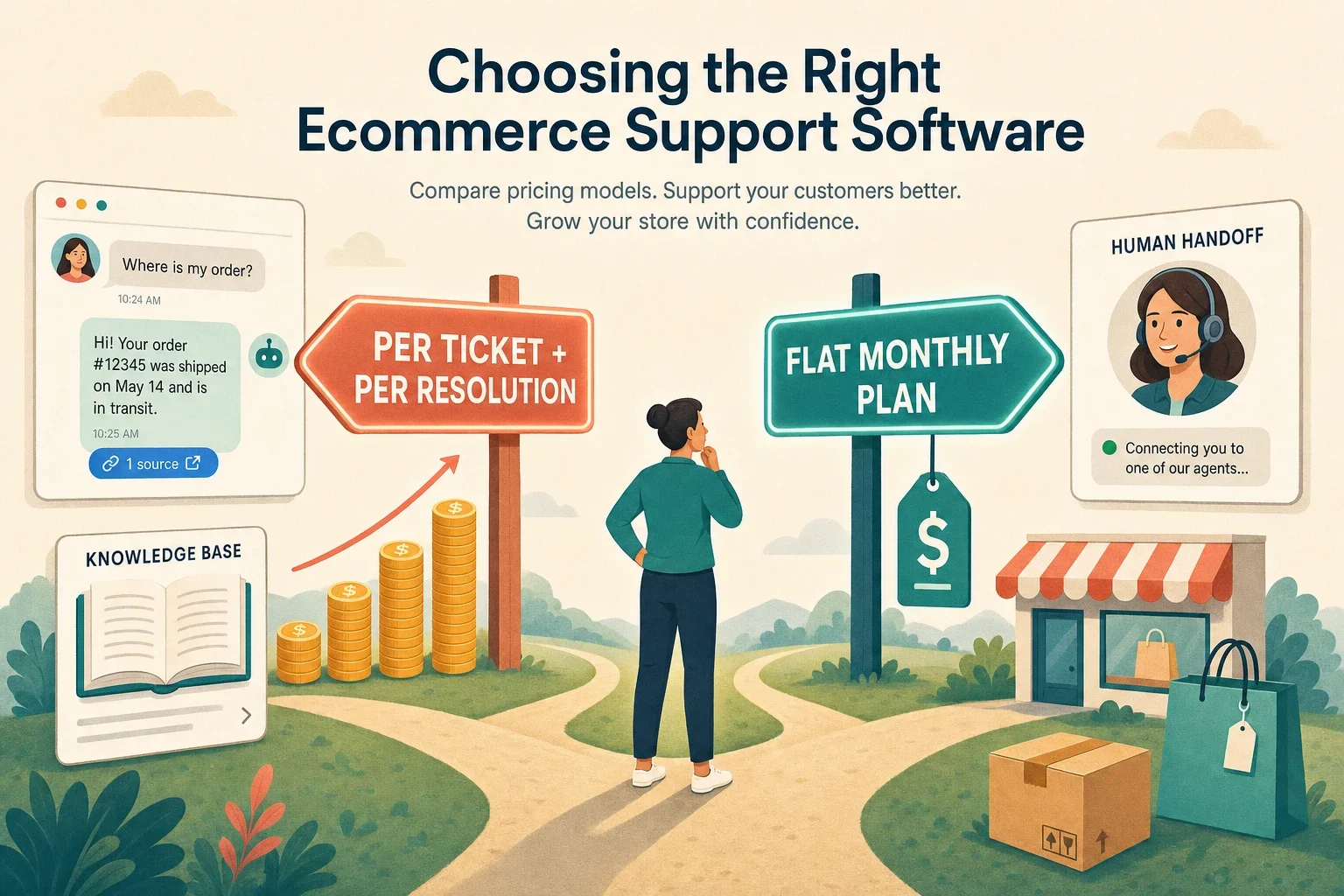
Most teams looking for a Gorgias alternative are not unhappy with Gorgias as a helpdesk. They are reacting to the bill. Gorgias charges per ticket for the helpdesk and then $0.90 to $1.00 per resolved conversation for its AI Agent on top, and those AI resolutions also count as helpdesk tickets — so a busy, well-automated store can end up paying on two meters at once.
This guide is for ecommerce and support teams weighing that tradeoff. I checked the public pricing pages, product pages, and help docs for every tool below in June 2026, and I am focused on products that can sit in a real support workflow, not generic chat widgets.
Owlish is our product, so this is not pretending to be neutral editorial. The useful part is that the tradeoffs below still hold even if you never choose Owlish.
The short list, if you want the answer first
Comparison data was checked against public vendor pages in June 2026 and may change — confirm the current numbers on each linked page. Gorgias sits at the top as the baseline you are comparing against.
| Tool | Best for | Key strengths | Limitations | Pricing note (June 2026) |
|---|---|---|---|---|
| Gorgias | Shopify-heavy stores tying support to revenue | Ecommerce-native helpdesk, order-aware automation, AI Agent | Per-ticket plans plus per-resolution AI; Shopify-first | Helpdesk $10/mo (50 tickets) up to $750/mo (5,000); AI Agent $0.90/resolution annual ($1.00 monthly) |
| Owlish | Stores wanting grounded answers, citations, and clean handoff without per-resolution math | Website/PDF/doc ingestion, source citations, human handoff, no-code, flat session pricing | Not a full ecommerce helpdesk; no native order management out of the box | Free; Starter $49/mo ($39 annual); Growth $149/mo ($119 annual); Scale $449/mo ($359 annual) |
| Re:amaze | Multi-platform stores wanting predictable per-user pricing | Native Shopify, WooCommerce, BigCommerce; chat, social, SMS in one inbox | AI automation is less LLM-native than newer tools | Per-user: Basic $29, Pro $49, Plus $69/user/mo; Starter $59 flat (500 conversations) |
| Tidio | Small stores wanting live chat plus an AI agent | Lyro AI agent, easy setup, low entry price | Billed by conversation; Lyro is a separate add-on | Starter $24.17/mo (100 conversations); Lyro AI from $32.50/mo (50 AI conversations) |
| Intercom (Fin) | Scaling teams wanting the most capable AI agent | Strong Fin AI Agent, mature messenger, deep workflows | Per-resolution AI plus seat costs add up | Fin $0.99/resolution; Intercom seats from $29/seat/mo |
| Zendesk | Larger operations wanting a full service platform | AI agents, knowledge base, messaging, telephony, deep routing | Per-agent suite pricing rises quickly | Suite Team $55/agent/mo, Professional $115, paid yearly; Copilot +$50/agent/mo |
| Help Scout | Teams wanting a calm, email-first inbox with AI as an add-on | Clean shared inbox, knowledge base, AI Answers | Narrower than a full ecommerce desk; AI billed per resolution | Free (up to 5); Standard $25/user/mo, Plus $45, Pro $75; AI Answers $0.75/resolution |
Why teams look for a Gorgias alternative
Gorgias is not weak. It is a genuinely good ecommerce helpdesk, especially if you live in Shopify. Most replacement searches start for one of four reasons.
The pricing has two meters. Gorgias’s public pricing lists helpdesk plans from $10/mo for 50 tickets up to $750/mo for 5,000 tickets, with the popular Pro tier at $300/mo for 2,000 tickets (Gorgias pricing). The AI Agent is billed separately at $1.00 per resolved conversation on monthly billing, or $0.90 annually. The catch is in the fine print: AI Agent interactions also count as helpdesk tickets for billing. So a resolution the AI handles can draw down your ticket allowance and your AI budget. The better your automation works, the more both meters run.
It is built Shopify-first. Gorgias’s deepest integrations and order-aware automation are strongest on Shopify. If you sell on WooCommerce, BigCommerce, a custom stack, or across several platforms, you are often using the less-developed side of the product.
Automation has historically leaned on macros and rules. Gorgias has added an LLM-based AI Agent, but a lot of long-time accounts are still running rule-and-macro flows that do not match what newer grounded AI agents can resolve from a knowledge base.
You only need part of it. Plenty of stores want an AI agent that answers the repetitive “where is my order,” “what’s your return policy,” “do you ship to X” questions and hands the rest to a person. They do not need a full ticketing CRM to get that, and they do not want their cost to climb every time the bot succeeds.
The right alternative depends on which of those is true for you. A three-person Shopify store and a 40-seat multi-brand operation should not pick the same tool.
When Gorgias is still the right choice
Before switching, be fair about what Gorgias is built for.
If your support is mostly order-status, returns, refunds, and exchanges on Shopify, and you want the agent to act on the order — look up the shipment, start a return, edit an order — Gorgias’s ecommerce-native automation is hard to beat. The per-ticket model is also fine if your volume is steady and predictable, and the AI Agent’s per-resolution cost can pencil out against the average cost of a human-handled ticket.
You are usually better off keeping Gorgias when:
- Shopify is your store and order actions are most of your support.
- Your volume is predictable enough that two meters is not a budgeting problem.
- You want one tool that is both the ticketing system and the order-aware automation layer.
If that is not your reality, you are probably paying for ecommerce depth, or a pricing model, that does not match how you actually do support.
Where Owlish fits
Owlish fits best when most of your support is repetitive, answerable questions — and you want those answered accurately, with citations, and handed cleanly to a person when they are not. It is an AI answering and handoff layer, not a full ecommerce helpdesk, and being clear about that distinction is the whole point.
Here is the shape the current public docs and pricing support:
- Ingest your real content — your website, help center, PDFs, DOCX, CSV, and FAQs — so answers come from your store’s actual policies and product info, not a model’s guess. See the knowledge base overview.
- Show a source on each answer, so a customer can click through and an operator can verify where a reply came from. See the citations docs.
- Hand off to a shared inbox with the full transcript and sources attached, on Growth and above, so the customer never re-explains. See the human handoff docs.
- Run one agent across surfaces — the web widget on every plan, plus Slack, Microsoft Teams, Google Chat, WhatsApp, Instagram, Messenger, and Telegram from Growth (WhatsApp, Instagram, and Messenger connect in one click; Telegram connects with your own bot). Check the pricing page for the current channel-by-plan breakdown.
On price, the structural difference is the unit. Owlish bills by chat session on a flat monthly plan, not per resolved conversation: a free plan, then Starter at $49/mo monthly or $39/mo billed annually, Growth at $149/mo monthly or $119/mo billed annually, and Scale at $449/mo monthly or $359/mo billed annually (around 20% off for annual). Your cost does not climb each time the agent succeeds.
Owlish is the right call when your shortlist sounds like:
- “Most of my tickets are the same policy and how-to questions, answered on my site.”
- “I want citations so I can trust and audit the answers.”
- “I want AI and human handoff to feel like one workflow.”
- “I want predictable pricing that does not punish me for high deflection.”
Owlish is not the right call when order management is the job. It does not ship a turnkey Shopify order-lookup, returns, or refund-automation flow the way a dedicated ecommerce helpdesk does. You can connect external lookups through skills and the API, but if “edit the order and process the refund inside the support tool” is your core need, buy Gorgias or Re:amaze instead — that is genuinely what they are for.
Re:amaze — predictable per-user pricing across platforms
Re:amaze is the closest like-for-like alternative if you want an ecommerce helpdesk but you are tired of per-ticket math. It supports native Shopify, WooCommerce, and BigCommerce integrations, which makes it a better fit than Gorgias for stores that are not Shopify-only.
The structural difference is pricing. Re:amaze charges per team member, not per ticket: Basic $29, Pro $49, and Plus $69 per user per month, with a flat Starter plan at $59/mo for unlimited team members capped at 500 responded conversations (Re:amaze pricing). For a small team handling a lot of tickets, per-user pricing is far more predictable than per-ticket plus per-resolution.
Choose Re:amaze when you want a full ecommerce inbox across several store platforms with a cost that does not move with ticket volume. The tradeoff is that its automation is more classic helpdesk than LLM-native grounded answering, so it is a weaker pick if a top-tier AI agent is your main reason for switching.
Tidio — live chat plus an AI agent for small stores
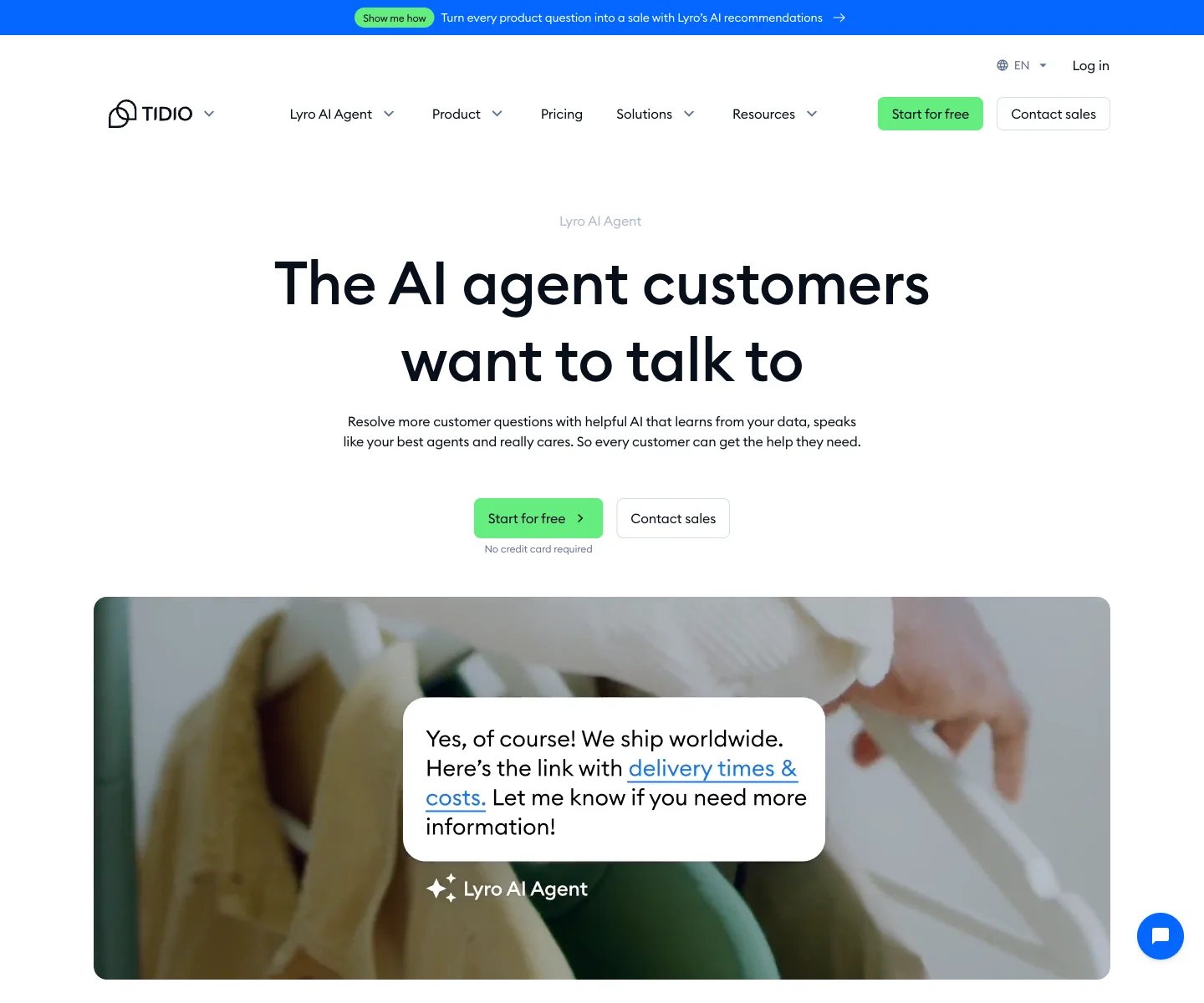
Tidio is a popular pick for smaller stores that want live chat and a chatbot in one widget, with the Lyro AI agent layered on for automated answers. Entry pricing is low: the Starter plan is $24.17/mo for 100 billable conversations, and the Growth plan starts at $49.17/mo (Tidio pricing).
Lyro is sold as a separate add-on rather than bundled into a tier, starting at $32.50/mo for 50 AI conversations, scaling up with volume. So the real cost is your conversation plan plus the Lyro add-on, which is worth modeling before you commit.
Choose Tidio when you are a small store that wants a friendly chat widget and an AI agent without enterprise complexity. It is a weaker fit once you need deeper ticketing, multi-channel routing, or grounded answers with auditable citations.
Intercom — the most capable AI agent, at a price
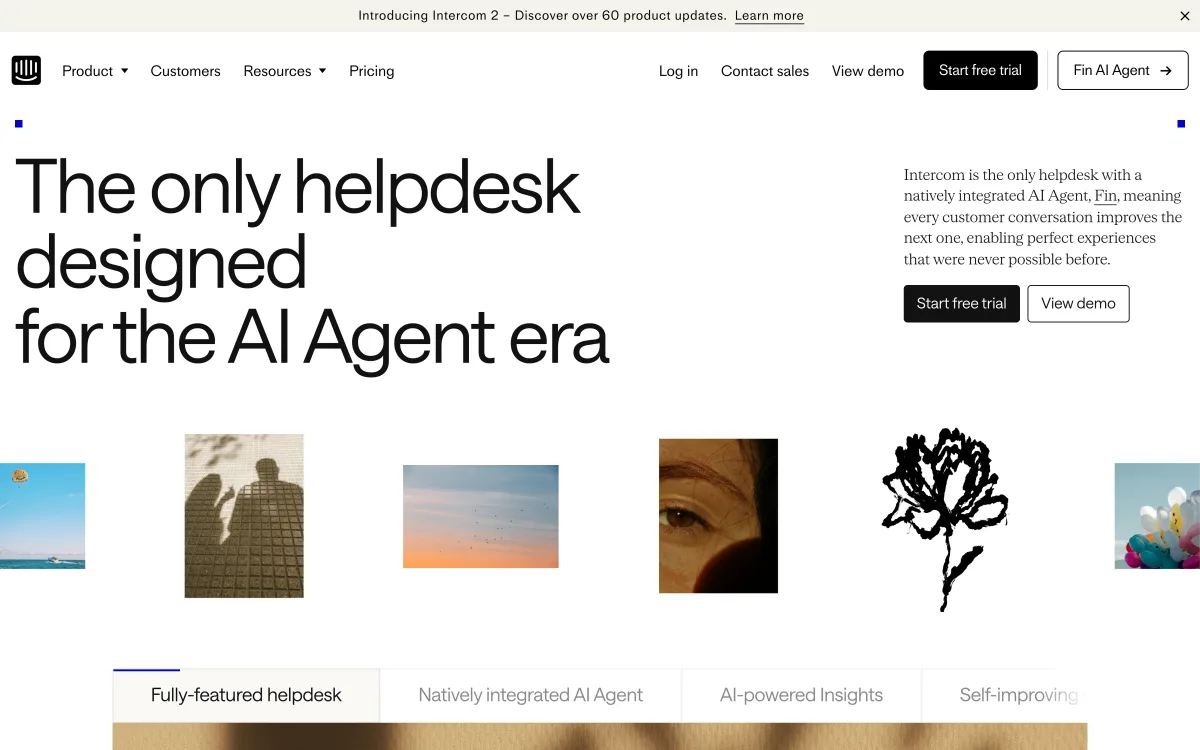
If your reason for leaving Gorgias is “I want a better AI agent,” Intercom’s Fin is the one to benchmark against. It is one of the strongest autonomous agents on the market and handles nuanced, multi-turn questions well.
Fin is priced per resolution at $0.99, billed on outcomes — you pay when it resolves the issue end to end (Fin pricing). It can run standalone on top of another helpdesk (with a 50-outcome monthly minimum) or bundled with Intercom’s own seats, which start around $29/seat/month.
The honest catch is the same shape as Gorgias: per-resolution AI plus seat costs means your bill grows with both your team and your success. Choose Intercom when AI quality is the priority and your volume justifies a premium agent. If you are switching because of per-resolution pricing, moving to another per-resolution tool will not solve that.
Zendesk — when you have outgrown a store-only helpdesk
Zendesk is the choice when you are scaling into a real service operation and ecommerce is only part of the picture. It brings AI agents, knowledge base, messaging, live chat, telephony, and deep routing in one platform.
Pricing is per agent: Suite Team at $55/agent/month and Suite Professional at $115/agent/month, both paid yearly, with Copilot as a separate add-on at $50/agent/month (Zendesk pricing). That adds up fast as the team grows, which is exactly why smaller stores leave it off their shortlist.
Choose Zendesk when you want the broadest platform and will actually use the ticketing, telephony, and reporting depth. It is overkill — and overpriced — for a small store that mostly needs an AI agent answering FAQs.

Help Scout — a calmer, email-first inbox
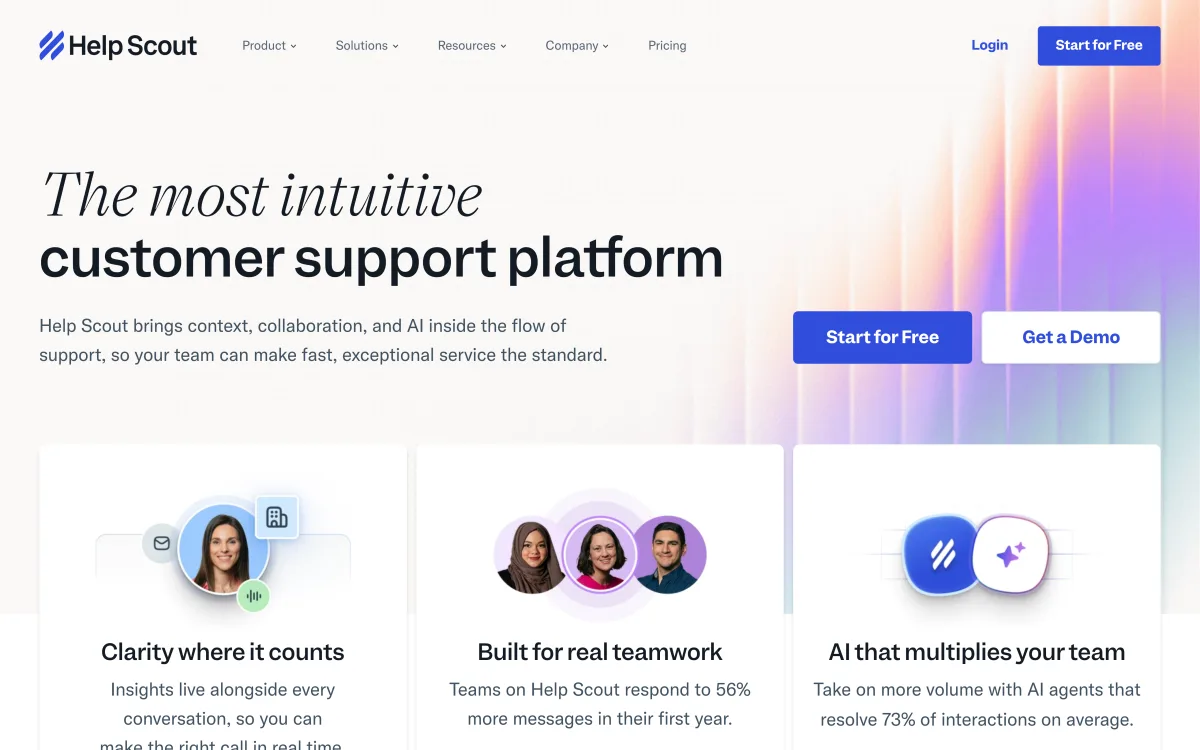
Help Scout is the gentlest alternative on this list. It is an email-first shared inbox with a knowledge base, and it adds AI without forcing you into a heavy platform. AI Drafts and AI Assist are included on paid plans, and the autonomous AI Answers agent is a $0.75-per-resolution add-on.
Plans are per user: Standard $25, Plus $45, and Pro $75 per user per month, with a free plan for up to five users (Help Scout pricing).
Choose Help Scout when most of your support is email, you want a clean inbox and self-service docs, and you would rather add AI as an option than build your whole stack around it. It is less ecommerce-native than Gorgias or Re:amaze, so it is a weaker fit if order actions dominate your queue.
How to choose, by what you actually need
There is no single winner. Match the tool to the job:
- You live in Shopify and need order actions inside support → stay on Gorgias, or look at Re:amaze if you want predictable per-user pricing or sell on other platforms too.
- Most of your tickets are FAQs and policy questions → an AI answering layer like Owlish handles that with citations and clean handoff, on flat pricing, without ripping out your store backend.
- You are a small store wanting chat plus a starter AI agent → Tidio is the low-friction entry point.
- AI quality is the whole point and budget is flexible → Intercom’s Fin is the agent to beat.
- You are scaling into a full service operation → Zendesk, if you will use the platform depth.
- Your support is mostly email and you want calm → Help Scout.
The one trap to avoid: switching off Gorgias’s per-resolution AI pricing onto another per-resolution tool, then being surprised the bill still scales with success. If predictable cost is the reason you are shopping, weight the flat-rate and per-user options accordingly.
FAQ
Why is Gorgias so expensive for AI support?
Gorgias bills the helpdesk per ticket and the AI Agent per resolved conversation ($0.90–$1.00), and AI resolutions also count as helpdesk tickets. On a high-volume, well-automated store, both meters run at once, so cost rises as automation improves rather than falling. Flat-rate and per-user tools avoid that shape.
What is the best Gorgias alternative for a small Shopify store?
It depends on the job. If you need order actions inside support, Re:amaze offers predictable per-user pricing with native Shopify support. If most of your tickets are FAQs and policy questions, a grounded AI answering layer like Owlish handles them with citations and human handoff on a flat plan. Tidio is the cheapest entry point for chat plus a basic AI agent.
Can I keep my helpdesk and just add better AI?
Sometimes. Intercom’s Fin can run standalone on top of another helpdesk, and Help Scout’s AI Answers and Owlish’s web widget can sit alongside existing tools. Whether that is cleaner than switching depends on how much your current helpdesk’s automation is the problem.
Does Owlish replace an ecommerce helpdesk like Gorgias?
No. Owlish is an AI answering and handoff layer, not a ticketing CRM with order management. It is strong for answering repetitive questions from your real content with citations and escalating the rest to a person. If editing orders, processing refunds, and managing returns inside the support tool is your core need, a dedicated ecommerce helpdesk is the better buy.
How much does an AI support resolution cost across these tools?
As of June 2026: Gorgias charges $0.90 (annual) to $1.00 (monthly) per resolved conversation, Intercom Fin is $0.99 per resolution, and Help Scout’s AI Answers add-on is $0.75 per resolution. Owlish does not charge per resolution — it bills a flat monthly plan by chat session. Always confirm current pricing on each vendor’s page.
Sources
- Gorgias — pricing
- Gorgias — AI Agent pricing explained
- Re:amaze — pricing
- Tidio — pricing
- Fin AI — pricing
- Zendesk — pricing
- Help Scout — pricing
- Owlish — pricing
- Owlish — knowledge base overview
- Owlish — citations docs
- Owlish — human handoff docs
Comparison data was gathered from public vendor pages in June 2026 and may change; check the linked pages for current details.
Trademark note
Gorgias, Re:amaze, Tidio, Lyro, Intercom, Fin, Zendesk, Help Scout, Shopify, WooCommerce, BigCommerce, Slack, Microsoft Teams, Google Chat, WhatsApp, and other product names mentioned here are trademarks or registered trademarks of their respective owners. Owlish is not affiliated with or endorsed by those companies unless explicitly stated. Comparisons reflect public information as of June 2026 and are provided for buyer guidance, not as endorsements.
Where to start with Owlish
If most of your store’s support is repetitive policy and how-to questions, point an agent at your help center, policy pages, and product FAQs, turn on citations, and set a handoff rule for anything touching a specific order or refund. The pricing page shows where human handoff and channels begin, and building your first agent walks through setup. You will know within a week of real transcripts whether an answering layer covers enough of your queue to be worth it — and whether the orders side still needs a dedicated ecommerce helpdesk alongside it.